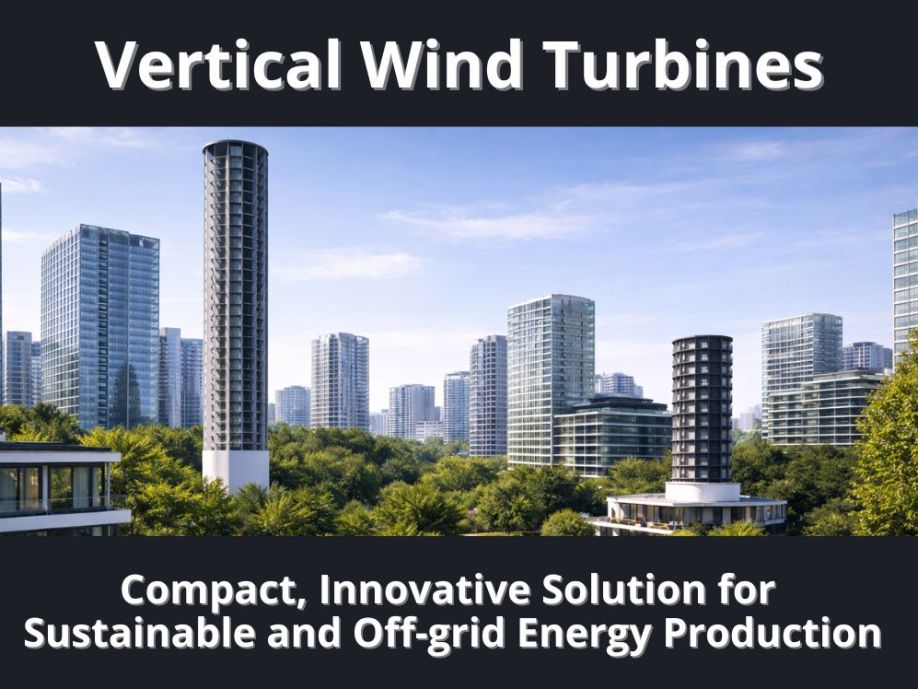
An innovative, vertical-axis energy generation system that works especially well in urban environments, providing local renewable power generation where traditional wind turbines can't be used.
A compact, city-friendly technology that generates electricity where it is really needed.
What are the most important expectations of property owners, industrial players, and local governments regarding future energy solutions?
- They want locally produced, predictable energy that reduces grid dependency and energy costs.
- They are looking for a solution that works safely and efficiently in an urban environment without requiring a large area.
- Sustainability and reducing their carbon footprint in a measurable and communicable way are important to them.
- They expect the energy system to fit in with their existing buildings and infrastructure.
- They are considering an investment that will provide a stable and future-proof solution in the long term.
Current energy production models do not adequately meet these expectations.
- Urban properties still largely rely on central energy networks, which makes them vulnerable.
- Traditional horizontal axis wind turbines are not suitable for operation in densely built-up urban environments.
- Renewable systems often require a lot of space or generate noise pollution, which limits their installation.
- In many cases, the permitting and integration processes are complicated, which slows down decision-making.
- Due to the lack of decentralized energy production, fluctuations in energy prices directly affect operating costs.
The Vertical Urban Wind Turbine offers a targeted solution to this problem.
- The vertical axis design of the system allows for the efficient utilization of turbulent urban wind conditions, ensuring stable energy production even in environments where the efficiency of traditional horizontal turbines is significantly reduced.
- Its compact and modular design allows it to be installed near or on top of buildings, while the 8, 18, and 30-meter prototype versions allow it to be adapted to different scales of real estate and industrial needs.
- The design is optimized for quiet operation and safe urban use, allowing it to be integrated into both residential and industrial environments without causing significant noise or visual pollution.
- Locally generated energy reduces grid exposure and mitigates the risks associated with energy price volatility, making the investment not only sustainable but also economically stable.
- The use of this technology contributes to reducing carbon emissions and meeting ESG targets, which is an increasingly important consideration for local governments and industrial players.
- Approximately 40% of the structural elements of the 30-meter prototype have already been completed, the testing site is ready, the electrical connections have been installed, and the tower's foundation has been completed, clearly demonstrating the advanced stage of the project.
- The next step requires €2.5 million in capital to manufacture the prototypes and prepare for series production, which will lay the foundation for the technology's entry into the industrial market.
Become a strategic co-owner in bringing this technology to market and share in the growth!
-
Join a co-owner in the next phase of development! us as
-
Be part of bringing a new model of urban energy production to market!
-
Let's lay the foundation for the international expansion of decentralized energy production together!
The project offers long-term, structural benefits for participants.
- The system will enable more stable and predictable energy management for urban properties in the future.
- Decentralized operation strengthens energy independence and reduces external risks.
- The use of sustainable technology improves the market perception and value of properties.
- The modular model allows for gradual, step-by-step capacity expansion.
Enter a new era of urban energy production now!